Yearly Archives: 2017

Lamar County Kin Volume One

A collection of stories, written or collected by Barb Carruth of the people of Lamar County, Alabama. Many are untold, interesting and informative to read.

Note from Barb: “It is my intent for this book to serve as an easy reference in the reader’s search of Lamar County people. I focus on many who have been forgotten, bringing their stories to life again.   You will likewise read about the  lives of present day Lamar people who have and are contributing to the preservation of our history or community. I am not a writer but a COLLECTOR of local historical information which may help you discover your family history or solve your family mystery.”

Lamar_County_Kin_Cover_for_Kindle (2)

Pioneer settlers came by covered wagon, many walked, rode horses, mules, oxen, bringing everything they owned with them on their backs or either in a wagon. Many left everything behind. They came with a dream, a dream of finding land, a better place, to build a future with hope for themselves and their family. Most came from Tennessee, North Carolina, South Carolina, Georgia and Virginia.

Many saw our area for the first time after the War of 1812 as soldiers returning back to Tennessee, recognized the potential, later coming back to claim land or work on the Military Road (Known as Andrew Jackson’s Military Road) built after the war.

Some came with nothing more than determination and a desire for a better life. They built homes, worked the land growing their food and crops to sell, began traditions that we keep today.

Many have been forgotten, their footprints are gone, washed away by the rains of time. But their hardworking spirit and their pride in our land is not forgotten. This pioneer spirit is alive today in remnants of the past. We will not forget.


FOR SALE

You can order from amazon.com or me if you like. I should have my books in by November 17th. Be sure to get your copy/copies, order from me NOW $19.99 each plus 8.00 shipping = $27.99; 2 books ship priority mail for $8.00.
You may pay by check, paypal or money order.  Email me at msbcarruth@aol.com to order.

Books will be available at Falkner Antique Mall  in Vernon, Alabama.

READ ABOUT

Armstrong Murder

A terrible tragedy happened in the Moore Hill house in the old Moscow community near Sulligent owned by Ezekial Armstrong and his wife Malinda Marchbanks Armstrong about 1882. The Winston Armstrong family were living in the Moore house at this time. Wint’s wife had a new baby. One chilly morning, Wint had gone to the next farm to help his brother-in-law John Burton Woods with hog killing. Cap Bankhead a trusted old Negro man was splitting wood in the back yard. He went in the house carrying the ax going into the bedroom where Eliza was lying in bed with her little baby. He stood there looking at mother and baby. There were three other people in the room: Mrs. Malinda Armstrong Eliza’s mother-in-law, ten year old Emma Armstrong and Elvira Hill a neighbor.
Mrs. Armstrong thought he had come in to see the baby. She asked, “Well Cap what do you think of our baby?” Without a word he went beserk, took his ax and spit Eliza’s head open. Cap hit Mrs. Malinda Armstrong with the ax but she evaded him. Elvira Hill slipped out of the house and ran on the path through the woods to the home of Burt Woods and told the terrible news. ……..Read the rest of the story in Lamar County Kin Volume One by Barb Carruth

Jane Clouse

Over One Hundred Years.
Lamar County comes to the front with the oldest living person in the state.
Mrs. Jane Clouse, who lives on the Military road ten miles north of Crews, is now one hundred and five years of age. She has been very active until of late. For the last six months she has failed considerably and it is with difficulty that she does her house work. She says that she counts herself but a little over one hundred years old; but the record of her birth which is now in the possession of a well-known gentleman of Marion County shows her to have been one hundred and five last autumn. Read the rest of the story in Lamar County Kin Volume One by Barb Carruth

Jesse Hollis & Eunice Tomlin Cole

They were born in Lamar County Alabama to John Cole and Ida Vernon Cole and Jacob Lafayette and Mary Emily (Molly) Tomlin. Both were reared on farms. The grandfathers of Jesse and Eunice were confederate soldiers. Jesse’s formative years were spent in the Walnut Grove community while Eunice’s were in the community between Mount Olive and Kingsville.
Their courting began prior to World War I and were married before Jesse’s entrance into the army. Jesse served with the infantry. His duties moved him rapidly and was unable to get mail from Eunice until he left the front line. Jesse was wounded, gassed, was blind and without food for seven days while serving in France. He served with a close friend and first cousin Edgar Louis Cole throughout his military career.
Upon being discharged from the Army they farmed on a farm adjoining Jacob Tomlin’s farm until Jesse entered Mississippi A & M. His attention in college was studying raising and marketing poultry. Upon their leaving college they resumed fruits of his education as well as general farming. The depression soon terminated the growing of poultry because it was too difficult to protect the chickens from theft by people desperate for food.
Jesse and Eunice had six children. The three eldest were girls: Ratha, Christine and Jean. The boys Glen, Thad and Jake respectively.
The Coles continued on the farm near the Tomlin’s homeplace. The farming experience included: cotton, corn, hay, truck farming (selling fruits and vegetables) and pure bred Guinea hogs. The marketing of these vegetables was a house to house approach in Kennedy and Fayette. The pigs were sold locally as well as advertised in farm publications and shipped throughout the America’s farming communities. The hogs were famous for the large amount of lard they produced. Read the rest of the story in Lamar County Kin Volume One by Barb Carruth

A. L. Guin

On Saturday afternoon about one o’clock Sulligent was shocked by the news that one of her citizens had been fatally shot. For some time bad feelings have existed between A. L. Guin and A. Q. Smith, growing out of a partnership business. Smith had been absent from there some days and had returned to Sulligent, either that day or the day before, and was at that time waiting for his brother to come and take him to his home at Bedford. Read the rest of the story in Lamar County Kin Volume One by Barb Carruth

James Holladay

Memory Of Jas. Holladay
Mr. James Holladay, an old man and full of years, died on Saturday the 23rd day of April 1887. He was 72 years of age; had lived in this county from his infancy. He was a good and peaceable citizen; had been a member of the Baptist Church for many years, a good and charitable neighbor and a kind husband. He has left an aged companion and many relatives and Read the rest of the story in Lamar County Kin Volume One by Barb Carruth

Girthie Coker Knight

01-26-2004
Girthie Coker Knight celebrated her 99th birthday on Saturday, January 24, 2004. Mrs. Knight is the mother of Robbie Knight, Jewel Sandlin and Dennis Knight. Having served on the Lamar County Board of Education for a number of years and his love for sports, Dennis Knight is widely known throughout the area. Robbie Knight, who worked at the pants factory, lives with her mother. Jewel Sandlin lives out of state, but is visiting with her mother and family.
I had a nice visit with daughters, Robbie, Jewel and granddaughter-in-law Lucy Knight late Sunday afternoon. Mrs. Girthie was taking a nap, so I missed speaking with her. When, Robbie, Jewel and Lucy spoke about Mrs. Girthie’s life, their faces filled with love and admiration. Read the rest of the story in Lamar County Kin Volume One by Barb Carruth


Below is a list of person titles of the articles or stories. Other persons are mentioned, these are like main characters. May be a story or a small tidbit, but it will be interesting. The tidbits are most likely from historical newspaper.

Akens, J. J.
Allman, Minnie Lee Pennington
Anderson, Robert Houston
Armstrong Family
Armstrong Murder
Atkins, Spenser
Baines, Lona
Baines, Wayne & Kathleen
Bankhead Family
Bankhead, G. E.
Bankhead, John Hollis
Bankhead, Marion
Bardon, Betty Etma
Beard, Andy
Beard, Onay Ray
Black, Ralph
Blackwell, Levina Catharine
Blaylock, James David
Bobo, Raymond
Bobo, W. L.
Bolin, Nellie
Bolin, Robert Donathan
Bolin, R. D. Mrs.
Boman, Sammie Lee
Boman, Thos S.
Bonman, Egbert
Box, William Lyles MD
Bradley, Emma
Bradley, Robert Luther
Bridges, Francis R.
Brock, Berneal
Brock, Hubert
Brown, Burrell
Brown, David
Brown, James
Brown, J. W.
Brown, Rias
Brown, Watson
Buckley, Corky
Burnett, Robert A. and E. Loucinda Traylor
Burns, Samuel
Burrow, John T.
Burrow, Martha Caroline Terry
Burrow, Rube and Sim Green
Byrd, L. D. Killed
Caldwell Family
Cantrell Family Travel to Roots
Carden, Avist 95th Birthday
Carr, Jean Smith
Carruth, Robbie Omary
Christain, Loree Hankins Butler
Clark, Erah Burks
Cleveland, Dorothy Noe
Clouse, Jane
Cobb, R. W.
Coker, F. M.
Cole, Jesse Hollis and Eunice Tomlin
Cole, Nellie Price
Collins, James
Combs, P. C.
Cooper, W. T.
Cox, Diaderea
Cox, Will
Danner, Levi Mrs.
Darnel, G. B.
Davidson, Lillie Millican Evans
Draper, Isaiah
Duke, Mose
Edgeworth, Carolyn Black
Edgeworth, Clovis and Ola Robinson
Edwards, John Bankhead
Edwards Infant
Edwards, Henry Tracy
Elliott, Billie Brooks
Evans, Charles
Evans, Richard Green
Falkner, B. L.
Flinn, W. J.
Flynn, Erma Jaggers
Gibbs, Farmer
Gilmer, John Thompson Fraizer
Gilmer, Virginia Woods
Goodwin, S. P.
Gosa, Faustina Hankins
Guin, A. L.
Guthrie, D. R.
Guyton, John Strawbridge
Hale, Harrison and Abraham Murdock
Hamilton, W. F.
Hankins, Huse
Hankins, John Franklin
Hankins, Stephen
Hankins Thomas
Harris, Milas
Hayes, Maggie Lee Davis
Hays, Hilda
Hays, Paul
Henson, L. N.
Hocutt, Rose Marie Gardner Smith
Holladay, C. C.
Holladay, James
Holladay, John Daniel Sr.
Holliday, Joe Mrs.
Hollis Family
Hollis, Darling Jones Jr.
Hollis, D. U.
Homan Family
Ingle, Louise Bankhead
Irvin – Norton Family
Jaggers, Clytee Turman
Jones, Harold
Jones, Jim
Jordan, Hiram
Jordan, J. E.
Kabell, Cynthia Mary Jackson
King, Mary Lou Kinard
Kirk, Robert
Knight, Girthie Coker
Knight, James
Lamar, Lucius Quintius Curtius
Lawrence
Lowery, Anderson
Livington, Richard
Lusk and Pennington Family
Marchbanks Infant
Marler, Adine
McClung, Jim
McDaniel, Albritian
McGee, Peter
McKinney, Veneta Aldridge
McReynolds, Bobby
Metcalf Family
Middleton, James
Mixon, J. W.
Mixon, William Pierce
Molloy, Thomas
Moore, George
Moore, James Field
Moore, John T.
Moore, Thomas B.
Morris, Floyd Jr.
Morris, John
Morris, Ruby Cash
Morton, M. Dr.
Morton, James M.
Mose
Mozley, John Coleman and Mary Jane Evans
Nesmith, T. B.
Nixon, W. L. Dr.
Noe Family
Noe, Lockie Reese
Noe Murders
Nolen, Ellie Ester Birmingham
Nolen, George Washington
Norton, Elmer
Oakes, Evelyn Elliott
Odom, Renzo Franklin
Pearson, Green
Pennington Family of Lamar County
Pennington, Hugh
Pennington, Mollie
Pennington, Rena
Pennington, Richard
Pennington, Silas Filmore
Perkins, Laverne Cunningham
Perry, R. J.
Pinkerton, Austin
Pollard, Mr.
Rasbury, Elizabeth
Rasbury, Isaac
Rector, Charlie Franklin and Annie Lucas
Rector Kin – Digging Up
Redden Family
Reese
Reeves, Jimmy Paul
Revolutionary Patriot Dedication Held
Roberts
Roberts, John Monroe Dr.
Robertson, Fay Memories
Robertson, Tom
Rush
Sanders
Sanders, Bill
Shackelford, Thurman and Margaret McDill
Shaw, Peter
Shelton, Dr. L. F.
Shields, Captain
Smith, A. Q.
Smith, L. R.
Smith, Rube
Smithson, Claud
Springfield, E. M.
Springfield, Harriet
Stanford, Martha Brown Heirs
Stanford, Thomas
Stanford, William Estate
Stone, Commissioner
Sudberry, Sabra Newell
Tate, Alfred William
Taylor, Jesse
Terrell, John D. Jr.
Terrell, S. M. Mrs.
Thomas Family Reunion
Thomas, William Murray
Thornton, Annie Belle Flynn
Todd, Ruby
Trim, J. M.
Trimm, Eunice and Willie Mae Trimm Hamm
Turner, Joe and Sibbie
Vail, Jeremiah and John Michael
Veal, Laura
Vernon, Edmond
Waldrop, W. W.
Wall, A. A.
Wall – Summers Wedding
Ward Family
Webb, Dumas
Webb, Jack
Webb, Joseph and Lucinda Emiline Evans
Weeks
Wells, Dug
Wells, Susie Davis
Wheeler, A. J.
Wheeler, Andy
Wheeler, William Chester
White
Wilson, J. E. A. and Rody Pennington
Wimberly, L. M.
Woods, Jessie Woolbright
Woolbright, Lula King
Wright, Ellis Northington
Wright, Robert Green
Young, Alexander
Young, Dora
Young, Eddie
Young, J. P. & R. W.
Young, Judge Mrs.
Young Limited Partnership
Young, William A.


New Loyd Pottery Book in the Making

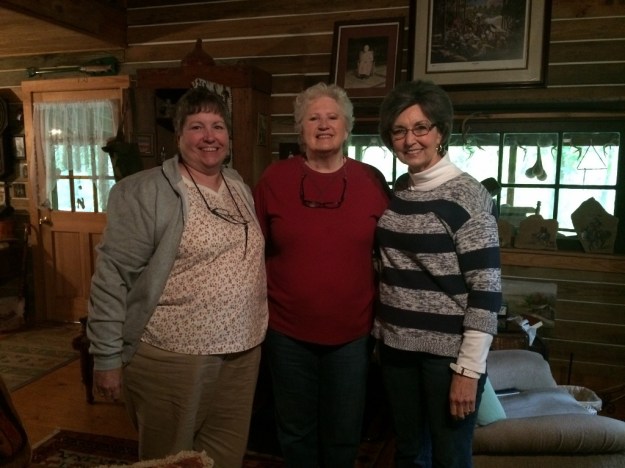
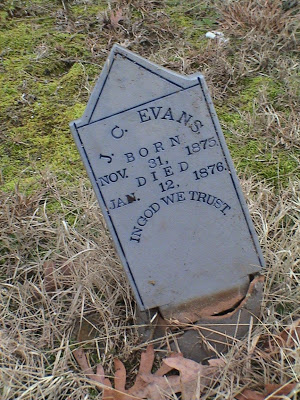
Janis Suggs Dyson author of Turning Clay into History: The Story of W. D. Suggs Pottery and sister Linda Wood visited Lamar County, Alabama May 5, 2017, a cold, blustery day, doing research for a new book on Loyd grave markers.


IMG_6788 (1024x768)

Left to right: Linda Wood, Annette Otts, Janis Dyson

Loyd marker at SS

“The Patented Loyd Marker was unique for both its style and its blue glaze. The shape of the flat headstone was simple, a rectangle topped by a triangle. A clay cylinder was installed below ground to hold a clay tab piece on the bottom of the headstone, according to the patent.

The markers found in Alabama cemeteries were likely mass-produced by the Suggs pottery works in Marion County, Ala., which was licensed to make the Loyd headstones, according to the book, “Itawamba County” by Mona Robinson Mills. The headstones made by the Loyds differed slightly from those made at the Suggs shop, she wrote. The Suggs markers are typically stamped “Patented June 10, 1879.”

“Markers produced directly by the Loyd family can be distinguished from the mass-produced, licensed versions,” Mills wrote. “An original Loyd grave marker almost always contains a leaf or flower drawn either at the top of the tablet of sometimes at the base.”
http://www.al.com/…/…/01/the_history_of_alabamas_rare_p.html

IMG_6789 (1024x768)

Left to right: :Linda Wood, Annette Otts, Barb Carruth


The Difference in Memorial Day and Veterans Day

roy ruffin (2) (833x1024)

By Barb Carruth

Memorial Day…….. a day to remember those who gave their lives for us….Memorial Day…..remembering the ones killed in action….. like my dad’s half-brother Roy Ruffin, young, handsome, 23 years old, from Columbus, Mississippi, killed January 3, 1945, in Belgium. Uncle Roy, a member of 1st BN 502 Prcht. Inf. 101st Airborne Div. jumps from a plane, for us……that young life ended while my granny is back home in Mississippi, praying for his safe return.

As I read on the internet about the 101st Airborn Div, I found “On 03 January 1945 2nd Battalion engaged in heavy fighting around Longchamps, Belgium. The Germans pressed forward and as many as forty jumpers, mostly from F Company, were rounded up and taken prisoner that day.” He was listed on the Casualty List 22 February, 1945.

An article, my mother kept in her big “Family Bible”, tells me: “He was one of the first to land in France June 6. He fought through the Battle of Normandy and later served in Holland before going to Belgium where he was killed in the Battle of Bastogne.”

His body, brought home, laid to rest in Tabernacle Methodist Church Cemetery in Pickens County, Alabama. Each year, nieces and nephews, place flowers and United States of America flags there, not because we knew him; he died before most of us now living were born, but because we honor him and his gift.

Tabernacle United Methodist Church (1024x768)

His mother, my “Granny Ruffin” is resting in a grave nearby….. …..when I visit …. if I close my eyes…. I can see a little petite woman…in a small bedroom, walls lined with floral wallpaper…..opening her cedar chest…..reaching inside…..taking the purple heart medal…holding in her hand close to her heart…..tears in her eyes. This, my friends is the difference in Memorial Day and Veterans Day.

Granny Ruffin

Lula Homan Woolbright  Ruffin

1887 – 1973

Cemetery Decoration Days – Lamar County, Alabama

 April

4th Sunday: Pleasant Ridge (near Gattman, MS) and Union Chapel, Moscow/Hollis/Holliday(near Sulligent)

 May

1st Sunday: Asbury, Cody Church of God, Fellowship, Furnace Hill, Kingsville near Detroit, Lampkin, Lovejoy, Mt. Hebron, Nebo, Sailors, Sandlin, Springfield, Walnut Grove, and Wesley Chapel near Detroit

2nd Sunday: Blaylock, Bethel Church of Christ, Christian Chapel Church of Christ, Crews, Evans, Liberty Freewill Baptist, Murry Shiloh CME at Furnace Hill, Olive Hill, Piney Grove Freewill Baptist Church, Pleasant Grove (Fayette County, AL) Pleasant Ridge Methodist, Shiloh (Pinhook) Methodist, Springhill, Webb, and Wofford

3rd Sunday: Antioch Baptist, Carter (Detroit), Beaverton Freewill Baptist, Ebenezer, Friendship South, Hubert Hollis aka Hollis Memorial, New Hope, Oakes Chapel, Pickle (Monroe County, MS), and Vernon City

4th Sunday: Emmaus, Fairview Baptist, Henson Springs, Lucas, Mt. Zion Baptist and Pine Springs, Wesley Chapel ( in Fayette County)

June

1st Sunday: Kingville Church of Christ, Mt. Vernon Methodist, Old Liberty, Riverside Baptist, and Shiloh Baptist

2nd Sunday: Mt. Pleasant, Mulberry, and Shady Grove

3rd Sunday: Corinth, Higdon, and Taylor Springs

July

 1st Sunday: Providence Methodist, and Macedonia Freewill Baptist in Pickens County..

4th Sunday: Blooming Grove

Fikes and Vinson – Historical Question and Answer Session

Willie Fikes and Nelson Vinson 04-25-2017 (1024x768)


Today, April 25, 2017, a great Historical Brown Bag lunch at Bevill State Community College in Hamilton, Alabama second in a series sponsored by Bevill State and Marion County Historical Society.

Dr. Beth Gibbs welcomed guests to the lunch. Bob Moore introduced local historians, Mr. Nelson Vinson and Mrs. Willie Fikes.

Mr. Vinson, who came to Marion County in 1949 is known as a “land line” authority ( property ownership legal boundaries) of the county. Mrs. Fikes has a vast knowledge of Hamilton and local area history, and its people. She and Mr. Vinson, know locations of many of the early buildings in Hamilton, that I only wonder about. Attendees were allowed to ask questions with Mrs. Fikes and Mr. Vinson responding.

If you love Marion County Alabama History, you should have been there.

Third luncheon in this series will be May 29th 12 Noon at Bevill. Randy Brown will be guest speaker, topic Andrew Jackson Military Road.

Need Family Mysteries Solved ?

I CAN HELP YOU!

My fee is $15.00 per hour, you set hour limit. Two free hours with purchase of 10 hours during month of May.

Contact me for free consultation. Specialize in West Alabama but I have solved mysteries in other locations of the United States.

I can help you with you DAR and SAR Applications.

I now have resources available to help with Native American and African American research as well.

Barb Carruth


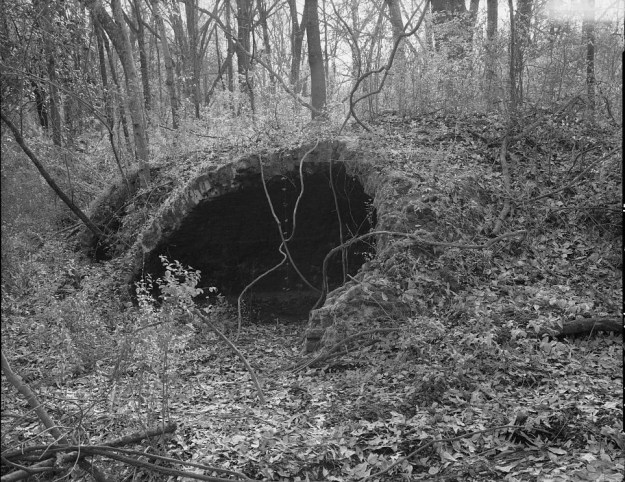
PETRIFIED BODIES FOUND MARION COUNTY ALABAMA 1885

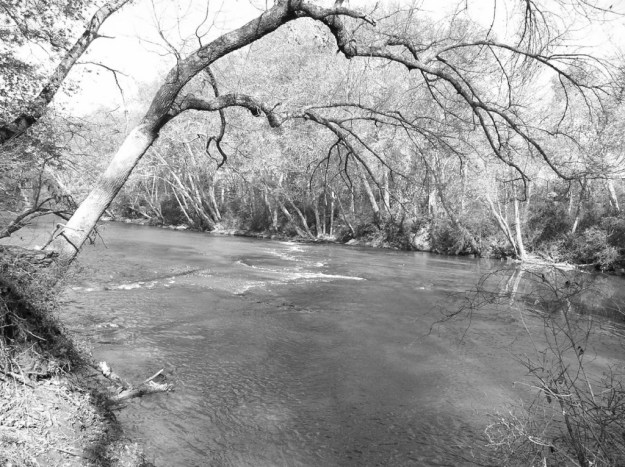
Buttahatchie River (2) (1024x766)

The Hickman Courier, Hickman, KY – Aug 28, 1885

A WONDER VERIFIED

The Long Lost Ark of the CovenantFrom the Pulaski Citizen.

The readers of the Citizen will read an article that appeared in the Nashville American last Friday, which we copy below, headed “The Cave of Buddahattachie in which a most incredible tale of finding a small box and three petrified human bodies in a cave in Marion county, Ala., was told.  The discovery was so wonderfully strange and the supposed contents of the box so marvelous that, while it impressed the more thoughtful with the possibility of its truthfulness, there is little credence given it by the average reader, doubtless from the fact that the people and the press have been so frequently imposed upon by unmitigated liars and unprincipled writers in a manner which is shameful and outrageous. It is the privilege of the Citizen to give to its readers further evidence in regard to this miraculous and to corroborate as herein given the truthfulness of the story as published in the American.

We give the American’s article: TUPELO, MISS., Aug. 4,1885.- In coming to Hamilton, the shire town of Marion County, The other day, I was reliably informed and greatly interested in a wonderful discovery recently made by one of the citizens of the county, Mr. J. W. Hadden. A few days since, while out hunting, Mr. Hadden saw in a cluster of bushes a snow-white fawn which he approached, hoping to capture a prize. The fawn almost allowed him to pick it up, when it suddenly run off a short distance and again stopped. Hadden again approached, when the fawn again retreated. This course was pursued by Hadden and the fawn until they reached a high bluff overlooking Buddahatchie river, some four miles east of Pearce’s Mills, when the fawn suddenly disappeared over the edge of the bluff. Upon coming up, Hadden peered over the bluff, when to his astonishment he saw the fawn standing on a narrow bench, hundreds of feet below, near the root of a large spruce pine recently blown up. After much difficulty he succeeded in reaching the spot where the fawn was last seen, but the fawn was not in the range of his vision.

Upon looking around he discovered that the pine in being uprooted disclosed to view a circular orifice in the bluff some three feet in diameter. Prompted by curiosity and a desire to catch the fawn, he provided himself with a torch and entered the cavern, and made a discovery that will not only immortalize himself and be a source of fabulous wealth, but will be of immense value and interest to the scientific men and biblical scholars of the world. Stretched out at full length upon the cave’s rocky floor, lay the petrified bodies of three human beings, two males and one female – an oblong box, of curious and antique design, two feet long, eighteen inches wide and sixteen inches deep, besides many other curiosities of smaller dimensions. Surprised Hadden withdrew from the cavern and returned to his home.

The next day Hadden returned with a trusted friend to the scene of his discoveries and removed the petrified bodies and other articles from the cave. The box, also petrified, was carefully moved from its resting place and broken, and found to contain a small earthen jar, a large roll of parchment and a brass rod.

Now, the mystery is, to what race of people did these bodies belong and how came them there? The parchment manuscripts are undoubtedly written in the Hebrew language. Many theories have been advanced by our people, but the most plausible one that I have heard is that the bodies are of Hebrew origin, that the box is the long-lost ark of the covenant, the rod the veritable Aaron’s, the jar the pot of manna and the parchment manuscripts the seven lost books of the Old Testament.

The scene of this wonderful discovery is one of sublime and picturesque grandeur. Hundreds of feet above huge masses of rock lift their hoary heads high in the air, while far beneath are the limpid waters of the Buddahatchie on their way to the gulf, “gurgling kisses to the pebbled shore.  Mr. Hadden has carefully boxed his treasures and will start immediately for Washington, D. C where he will deposit them in the Smithsonian Institution. – Now, Mr. Editor, this wonderful discovery is no “Joe Mulhattan yarn,” but can be fully substantiated by calling on or addressing the following parties of Hamilton, Ala.: J. C. Hamilton judge probate court, Maj. James H. Gast, editor Marion County Herald, and Col. James Pearce, on whose plantation the wonderful discovery was made. J. W. S.

A WONDERFUL CAVE

THE REMARKABLE STORY OF A COMMERCIAL TRAVELLER

A Tupelo, Miss, letter to the Nashville Banner says:

In coming to Hamilton, the shire town of Marion County, The other day, I was reliably informed and greatly interested in a wonderful discovery recently made by one of the citizens of the county, Mr. J. W. Hadden. A few days since, while out hunting, Mr. Hadden saw in a cluster of bushes a snow-white fawn which he approached, hoping to capture a prize. The fawn almost allowed him to pick it up, when it suddenly run off a short distance and again stopped. Hadden again approached, when the fawn again retreated. This course was pursued by Hadden and the fawn until they reached a high bluff overlooking Buddahatchie river, some four miles east of Pearce’s Mills, when the fawn suddenly disappeared over the edge of the bluff. Upon coming up, Hadden peered over the bluff, when to his astonishment he saw the fawn standing on a narrow bench, hundreds of feet below, near the root of a large spruce pine recently blown up. After much difficulty he succeeded in reaching the spot where the fawn was last seen, but the fawn was not in the range of his vision.

Upon looking around he discovered that the pine in being uprooted disclosed to view a circular orifice in the bluff some three feet in diameter. Prompted by curiosity and a desire to catch the fawn, he provided himself with a torch and entered the cavern, and made a discovery that will not only immortalize himself and be a source of fabulous wealth, but will be of immense value and interest to the scientific men and biblical scholars of the world. Stretched out at full length upon the cave’s rocky floor, lay the petrified bodies of three human beings, two males and one female – an oblong box, of curious and antique design, two feet long, eighteen inches wide and sixteen inches deep, besides many other curiosities of smaller dimensions. Surprised Hadden withdrew from the cavern and returned to his home.

The next day Hadden returned with a trusted friend to the scene of his discoveries and removed the petrified bodies and other articles from the cave. The box, also petrified, was carefully moved from its resting place and broken, and found to contain a small earthen jar, a large roll of parchment and a brass rod.

Now, the mystery is, to what race of people did these bodies belong and how came them there? The parchment manuscripts are undoubtedly written in the Hebrew language. Many theories have been advanced by our people, but the most plausible one that I have heard is that the bodies are of Hebrew origin, that the box is the long-lost ark of the covenant, the rod the veritable Aaron’s, the jar the pot of manna and the parchment manuscripts the seven lost books of the Old Testament.

The scene of this wonderful discovery is one of sublime and picturesque grandeur. Hundreds of feet above huge masses of rock lift their hoary heads high in the air, while far beneath are the limpid waters of the Buddahatchie on their way to the gulf, “gurgling kisses to the pebbled shore.  Mr. Hadden has carefully boxed his treasures and will start immediately for Washington, D. C where he will deposit them in the Smithsonian Institution. – Now, Mr. Editor, this wonderful discovery is no “Joe Mulhattan yarn,” but can be fully substantiated by calling on or addressing the following parties of Hamilton, Ala.: J. C. Hamilton judge probate court, Maj. James H. Gast, editor Marion County Herald, and Col. James Pearce, on whose plantation the wonderful discovery was made. J. W. S.

Source: Thursday, August 27, 1885   Patriot Newspaper (Harrisburg, Pennsylvania) ; page: 3


SHERIFF METCALFE AND C. W. HALL BRING THEM BACK

Lee S. metcalfe and Jala Guin Metcalfe cira 1889 (2) (780x1024)

Sheriff Lee S. Metcalfe with wife, Jala Guin Metcalfe about 1889.

 THEY ARE GONE – But Not to the Penitentiary

 The two prisoners, WILL COX, white and LUTHER METCALFE, col. who were sentenced to the penitentiary at the last term of the circuit court and were confined in jail here waiting for the penitentiary authorities to send for them, escaped jail Sunday evening about dark.  When Mr. WIMBERLY, the jailor, carried their supper to the jail he placed it inside and closed the door of the cell and pushed the bolt in place, then he closed the outside door, or the door of the corridor and pushed one of the bolts in place, but did not secure either – not thinking there was any possibility of the prisoners being able to reach the bolts – and went into an adjoining yard for a bucket of water, during his absence they succeeded in prizing back the bolt to the inner door with a stick of stove wood, and COX slipped his hand between the bars of the cage and reached the bolt of the outer door and slipped it back., and they were free, as the doors to the building are never fastened.  It was getting dark and no one was near the jail, so they had no difficulty in making their escape.  Mr. WIMBERLY gave the alarm, but it being dark and no dogs to trail them nothing could be done towards capturing them.

One prisoner, BOB LAMPKINS, who was committed to jail late Friday did not try to escape, and was very sensible for not leaving as he was bailed out last Monday.

Since the above was written LUTHER METCALFE has been brought back. Mr. C. W. HALL brought him in and received the reward of $25.00 which was offered for his apprehension.

COX was brought in by Sheriff METCALFE Wednesday evening.  He was caught on the platform at Guin waiting for a train. The Vernon Courier Vernon, Alabama October 12, 1888.

Mr. HALEY, traveling agent for the T. C. L. & Railroad Co. was in town Wednesday after the two prisoners, COX and METCALFE, and left for Pratt Mines with them to charge. The Vernon Courier Vernon, Alabama October 19, 1888. The jail is now empty. The Vernon Courier Vernon, Alabama October 26, 1888.


A DASTARDLY ASSAULT – Unknown Parties Shoot at Sheriff L. S. METALFE in the Dark

On last Friday night, about 11 o’clock Sheriff METCALFE walked up to his stable in town to see about his horse, which had been sick that evening, and as he was returning to the hotel when passing the north-east corner of the court-house yard, he saw two men standing out in the street about ten yards away, and supposing them to be some of the town boys spoke to them and asked “Who is there?” at the same time taking a couple of steps toward them. When he did this one of the parties threw up a pistol and fired, the ball passing through Sheriff METCALKE’S hat brim about one and a half inches from his head. Sheriff METCALFE returned the fire instantly with two shots at the then fleeing parties, who, when they saw he was going to return the fire unceremoniously took to their heels, running down in the direction of the jail. It is not known whether either of his shots took effect, as the parties made good their escape. No cause for such an assault can be given, as Sheriff METCALFE has no enemies who would attempt to take his in the dark. The night was so dark that he could not see the parties well enough to give any description of them A telegram was sent to Pratt Mines for blood hounds to be brought down to tail up the parties but none could be got all of them being in use at Pratt Mines. June 27, 1889 Vernon  Courier Vernon, Alabama.

SHERIFF METCALFE SON OF WILEY SAINT CLAIR METCALFE EARLY SETTLER OF SULLIGENT

Wiley Saint Clair Metcalfe born in 1837, married Virginia Ellen Bradley in 1858. Wiley and Virginia were early settlers of what is now Sulligent and Lamar County.

 Mrs. Virginia Metcalfe was known in Sulligent as “grandma Metcalfe”. The Metcalfe’s reared nine children and had 36 grandchildren.  The Metcalfe’s children were: Martha Elvira, who married Perry Evans; Leander Saint Clair “Lee”, married Jala Guin Lee served as Lamar County Sheriff; Henry Franklin married Melinda Shaw. Henry worked for the Frisco railroad; Sarah Anna Elizabeth, married John Bannister. John was Sulligent Marshall; James W. “Jim Buck” married Amanda May; Rosa Ellen, married first William Cobb, second Cannon Richard Weaver, after Mr. Cobb’s death; John Edward “Ed” married Lou Ella Brown. Ed founded the Metcalf Grocery and Market that was in business in Sulligent  for 70 years; Hattie Stella married Rudolphus Brown, a brother to Lou Ella Brown; George Tollivar Carrington “Toll”, married Bessie Lee Stanford. Toll worked as stock broker in Kentucky.

Historical newspapers are transcribed by Veneta McKinney from microfilm. Metcalfe picture is from Rose Marie Smith Collection housed in Mary Wallace Cobb Memorial Library Vernon, Alabama.

JOHNSON HOLDING HIS PISTOL CLOSE TO A SHADE TREE TOOK DELIBERATE AIM AND FIRED – SULLIGENT MURDER

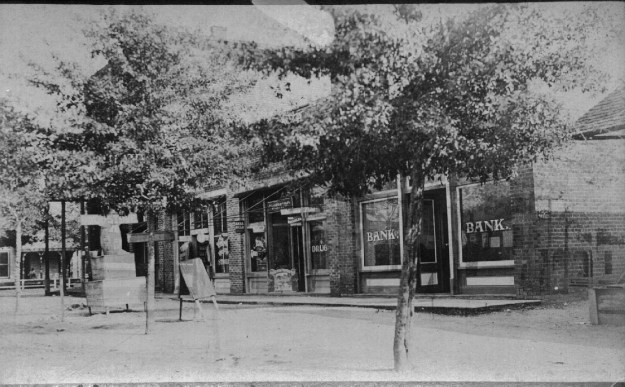
Sulligent street

L. D. Byrd Killed. Early Thursday morning even before the sun had risen far above the eastern horizon, the alarm at the telephone rang out and “Hello what is wanted” went from the operator at this place. But how unexpected and how shocking was the reply which came from Sulligent. “Mr. Byrd was shot and instantly killed a moment ago by Burley Johnson of near this place.”

It seems that an old grudge had been cherished between them for some time past, and they were evidently expecting trouble as both were armed and when the fatal combat occurred. It also seems from the best information we can get that Mr. Byrd was using every means possible to escape, when they met for the last time. Details are meager here, notwithstanding the affray occurred Thursday morning.

According to our information, Mr. Byrd, when seeing that he must meet Johnson, said to his nephue that Johnson was hunting trouble and so saying left the side-walk, giving to Johnson the right-of-way. They had not proceeded far when Johnson holding his pistol close to a shade tree took deliberate aim and fired. He continued to fire until he had fired five shots, four of which took effect, Mr. Byrd fired two shots, neither of which took effect. Johnson succeeded in making his escape. Source: The Lamar Democrat Vernon, Alabama  07-23-1898, transcribed by Barb Carruth.

“Lucian David Byrd, son of John K. and Elvira Moore Byrd, was born September 26, 1861, near Detroit, Alabama. Later, the Byrd family moved to Splunge, Mississippi. On November 27, 1878, he married Mary F. Collier who died when their son was born. Their children were Lillian Byrd, who married R.C. Paul, and Haston Byrd, who married Donnie G. Nichols.

Later, L.D. Byrd married Lula Duncan Guthrie. They had five children, but only two lived: Gertrude Byrd, who married Byron Woods, and Annie Mae Byrd, who married Jake Green.

In the early days of Sulligent, this family moved to the new town where Mr. Byrd established a mercantile business. He owned farm land where the Hyster Company now stands. Through the years this land has been called the

Byrd Place. The old Byrd home is still standing on Vernon Street in Sulligent.

L.D. Byrd was a strong leader in First Baptist Church from its beginning. He was a charter member and soon was elected church clerk, a position he held for eight years. Many times, he served on church committees and often was sent as a messenger to the Sipsey Baptist Association. When he died on July 21, 1898, the church lost a valuable member.” Source: First Baptist Church Sulligent, Alabama 1890 – 1990 Our Heritage Our Hope a History of 100 Years, written by Mrs. Virginia Woods Gilmer.

BANG! BANG! MOONSHINERS-DISHING OUT PURE JUICE CAPTURED IN VERNON

BANG! BANG! BANG!

Pratt Mines

Smith Brothers sent to Pratt Mines. “Their friends paid up the cost in all the case which leaves them to work out only the penalties which is, JOHN 115 days and JEFF. 155 days.”

The quiet streets of Vernon presented a very excitable scene Tuesday night.  Two wild-catters, brothers, by the name of John and Jeff Smith, from Marion County, were overhauled in Yellow Creek Swamp about a half mile from town, dishing out the pure and unadulterated juice to the boys.  They were captured by Constable Haley and posse, they showed fight when the officers walked up on them, and in the tussle Jeff discharged his pistol the ball striking Mr. Tom Moore on the left arm, but being a very small pistol and at such close range the ball did not break the skin.

They were brought to town and warrants were issued by Judge Young on the charge of violating the revenue law and prohibition law, and a charge of resisting arrest was placed against Jeff.  Not being able to give bond they were committed to jail, and when the officers started with them to jail the fun commenced again.  John jerked loose from two men, one holding each arm, and started for Yellow Creek Swamp at a lively rate, with Constable Haley close behind.  Several shots were fired in the chase none of which took effect, he was soon overhauled, however, and brought back and the cell doors closed on him.

Their trial came of Wednesday in the county court.  They plead guilty to retailing and accepted the lowest fine, $375 each, and Jeff was fined $10 for the assault.  Up to going to press they had not confessed judgment but are expecting their friends from Marion county to come to their relief. Source: The Vernon Courier Vernon, Alabama October 12, 1888.

Up to the time of going to press no disposition has been made of the Moonshiners.”Source: The Vernon Courier Vernon, Alabama October 19, 1888.

The friends of JOHN AND JEFF. SMITH were in town Monday seeing what could be done towards securing their release, but while they were seeing what they could do, Mr. HAYLEY, agent for the T. C. I & Railroad Company arrived in town as soon had them dressed for a trip to Pratt Mines, and left for that place with them in charge.  Their friends paid up the cost in all the case which leaves them to work out only the penalties which is, JOHN 115 days and JEFF. 155 days. Source: The Vernon Courier Vernon, Alabama October 19, 1888 transcribed from microfilm by Veneta McKinney.

PRATT COAL & COKE COMPANY HISTORICAL OVERVIEW

To meet the pressing demand for labor in the early days, the Pratt Coal and Iron Company (later TCI) employed state convicts. The practice of working convicts outside the prisons, begun in Alabama in 1866, was common across the South well into the 1900s. Private companies paid state and county governments a certain amount each month for each convict. The company built prison facilities and clothed and fed the men, who were required to work 10 hours a day and fill a quota. TCI continued the practice until 1914, and other District mining concerns worked convicts until 1928.

In 1883, a new Alabama law required the state penitentiary physician to reside where the greatest number of convicts were confined. Thus Dr. Russell M. Cunningham moved to the prisons at the Pratt mining camp to take care of some 1,000 inmates a year. His attention to sanitary conditions, hours of work, diet and recreation resulted in the reduction of the mortality rate from 18 percent in 1881 to two percent in 1884. In reports to the state inspector of mines in 1883 and 1884, Cunningham recommended a stockaded convict town be built, with 50 cabins, a hospital, adequate bathing arrangements, guardhouses, a cook room, kitchen and space for outdoor recreation, so that the welfare of the prisoners would approximate that of the free miners. His findings and recommendations created a stir among lessees of convicts and led to improvements in sanitation and living conditions at the mines.

Prison facilities were enlarged in 1888 after TCI signed a 10-year contract for 500 to 600 convicts with the State of Alabama. An 1888 Sanborn map of the Pratt mines shows a complex of frame structures including a prison, convicts’ kitchen, convicts’ dining commissary, bathhouse and kettles to boil clothes. By August 1906, probably the era of maximum use of convicts at the Pratt Mines, 906 state convicts (described as able bodied males, age 16 and over from 23 county and state prisons) resided here. Of these, 300 worked at No. 1.

Until January 1914, Cunningham retained charge of medical services for convicts employed by principal mining contractors throughout the state and served as company physician for the Pratt Company and TCI, At Ensley he constructed a private infirmary, the Cunningham Hospital, to serve his large industrial practice. During this period, he also launched a successful political career, serving as state senator (1896-1900), lieutenant governor (1901-1904; 1905-1907), and acting governor of the state (1904-1905). Throughout his political career, Cunningham worked for reform of the convict lease system, inspection of coal mines and regulation of mine sanitation.

Source: HISTORIC AMERICAN ENGINEERING RECORD National Park Service Department of the Interior P.O. Box 37127 Washington, DC 20013-7127.

https://cdn.loc.gov/master/pnp/habshaer/al/al1000/al1048/data/al1048data.pdf

Picture source: https://www.loc.gov/item/al1109